
The Best Deck Stain, According to Professional Painters
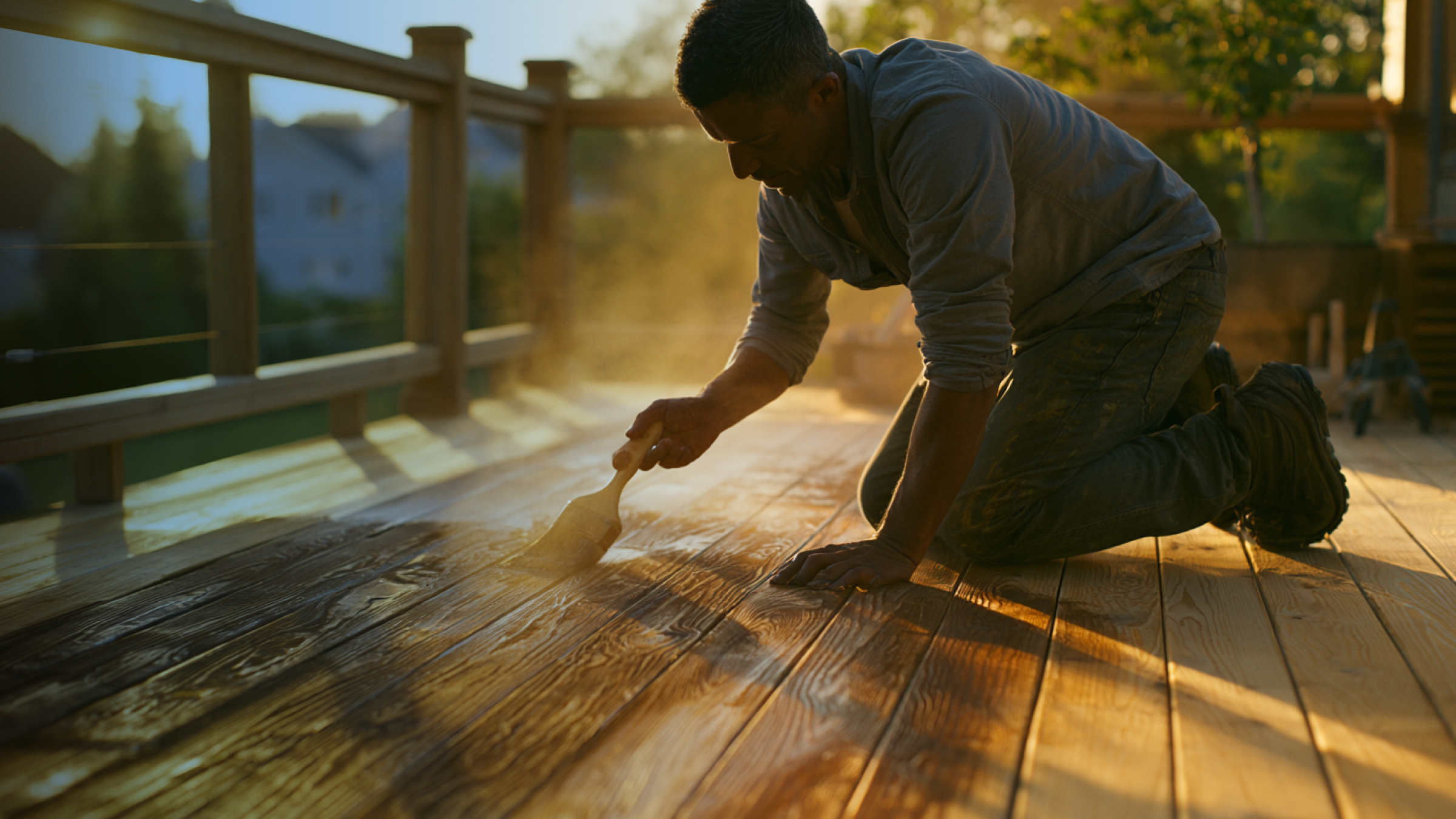
The best semi-transparent deck stain is PPG Proluxe, and the best solid deck stain is a tie between Sherwin-Williams SuperDeck and Benjamin Moore Arborcoat, according to a survey of our network of 5,000+ professional painting contractors.
Decks need to be restained every couple of years. They take a heavy beating from the weather and deal with heavy foot traffic, so when choosing a stain for your deck, you don't want to go cheap. These contractors stand behind their service, and their businesses hinge on the quality of the products they use, which makes their votes more reliable than mixed anonymous reviews. For more recommendations like this, see our guide to the best interior house paint.
What Is the Best Semi-Transparent Deck Stain?
PPG Proluxe took the most votes for semi-transparent stain. We expected Sherwin-Williams to dominate, but contractors consistently praised Proluxe for its ease of application and the rich finish it leaves on properly prepared surfaces.
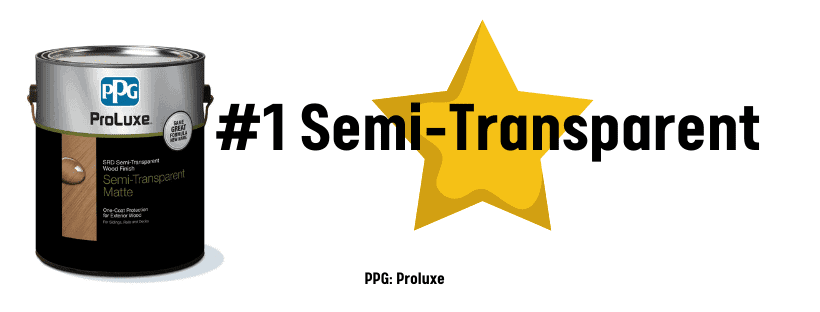
The catch is price: Proluxe typically runs $40 to $70 per gallon depending on source and promotions. Most contractors said they would rather pay premium prices for a premium product than risk an inferior stain on an exposed deck.
PPG Proluxe specifications: 55.1% solids content by volume, practical coverage of 400–500 sq ft per gallon, dry to touch in 6 hours at 50% relative humidity, hard cure in 24–48 hours at or above 77°F (product details sheet).
Runner-up: Sherwin-Williams SuperDeck
SuperDeck lost the semi-transparent title by exactly one vote.
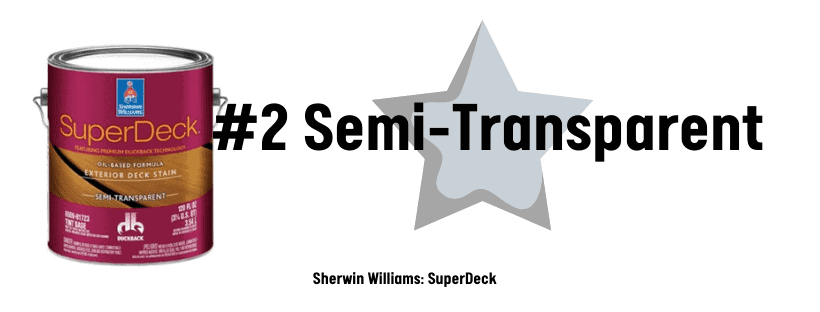
Pros of SuperDeck:
- Durability: the material eventually lifts in high-traffic areas, but holds up well overall. Powerwashing and sanding before application extends the life of any stain.
- Coverage: reaches the desired color reliably in 2 coats, where some stains need more.
- Mildew resistance: water-based and doesn't promote mildew growth, a must in humid climates.
- Application: low viscosity means it sprays through airless equipment with little trouble.
Cons of SuperDeck:
- Cleaning: the smooth sheen fades relatively quickly, making accumulated dirt harder to remove. Light monthly cleanings help.
- Prep: Sherwin-Williams recommends its own Stain and Sealer Remover as part of the prep system, and contractors report it doesn't work very well.
- Protection: being water-based, it won't repel water, which can affect the life of the finish and the deck.
What Is the Best Solid Deck Stain?
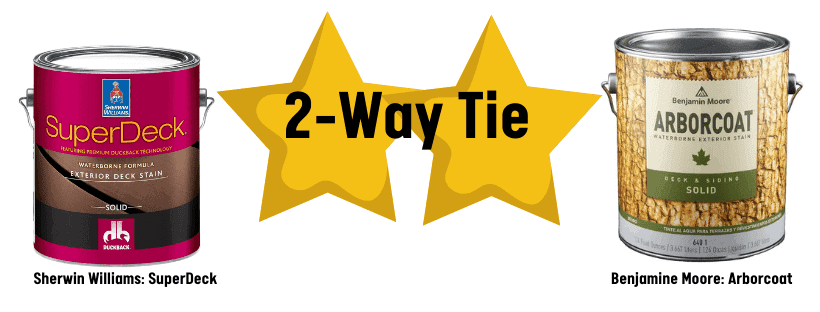
The solid stain vote ended in a two-way tie between Sherwin-Williams SuperDeck and Benjamin Moore Arborcoat. SuperDeck's pros and cons are covered above, so here is how Arborcoat stacks up.
Pros of Arborcoat:
- Protection: particularly strong against UV graying; it creates a thick barrier with extreme protection against ultraviolet rays.
- Cost: about $0.39 per square foot on average, putting it mid-range.
- Mildew resistance: formulated with zinc oxide; users report little to no mildew buildup.
- Color stability: users report consistent color for years after application.
Cons of Arborcoat:
- Durability: many reports suggest it can strip within the first few years, especially in extreme cold.
- Application: dries fast and shows overlap marks; a clear top coat helps even out the appearance.
- Appearance: the cured finish can read as film-like or plastic to some customers.
Sherwin-Williams SuperDeck solid specifications: $40–$54 per gallon, 31–33% solids by volume, 200–400 sq ft coverage per gallon, dry to touch in 1 hour, recoat in 2 hours at or above 77°F (product details sheet).
Benjamin Moore Arborcoat specifications: $40–$48 per gallon, 38% solids by volume, 300–400 sq ft coverage per gallon, dry to touch in 1 hour, recoat in 3–4 hours at or above 77°F (product details sheet).
Deck Stain FAQ
What's the difference between solid and semi-transparent stain?
Opacity. Semi-transparent stains carry light pigment and penetrate the wood, letting the grain show through. Solid stains carry heavy pigment that completely covers the grain and form a film on top of the wood rather than soaking in.
Do I need to prime a deck before staining?
Usually not. Some sources recommend primer under a solid stain, but most top-of-the-line products today are self-priming. Some contractors instead follow a solid stain with a waterproof sealer.
What prep does a deck need before staining?
Remove any old or peeling stain first. That typically means a chemical stripper, a powerwash, and a good sanding. Proper prep extends the life of any stain.
Can you stain a brand-new deck?
It depends on the wood. Pressure-treated lumber needs about 6 months before it can receive a stain. A solid stain gives you a little more wiggle room since it doesn't need to penetrate the wood.